A Thai Lesson in Chiang Mai
On a recent trip to Chiang Mai, my good friend enrolled us in a cooking class where we learned how to cook Thai dishes, including Pad Thai and Tom Yum soup. The experience turned out to be a wonderful way to immerse ourselves in Thai culture.

The Thai Kitchen
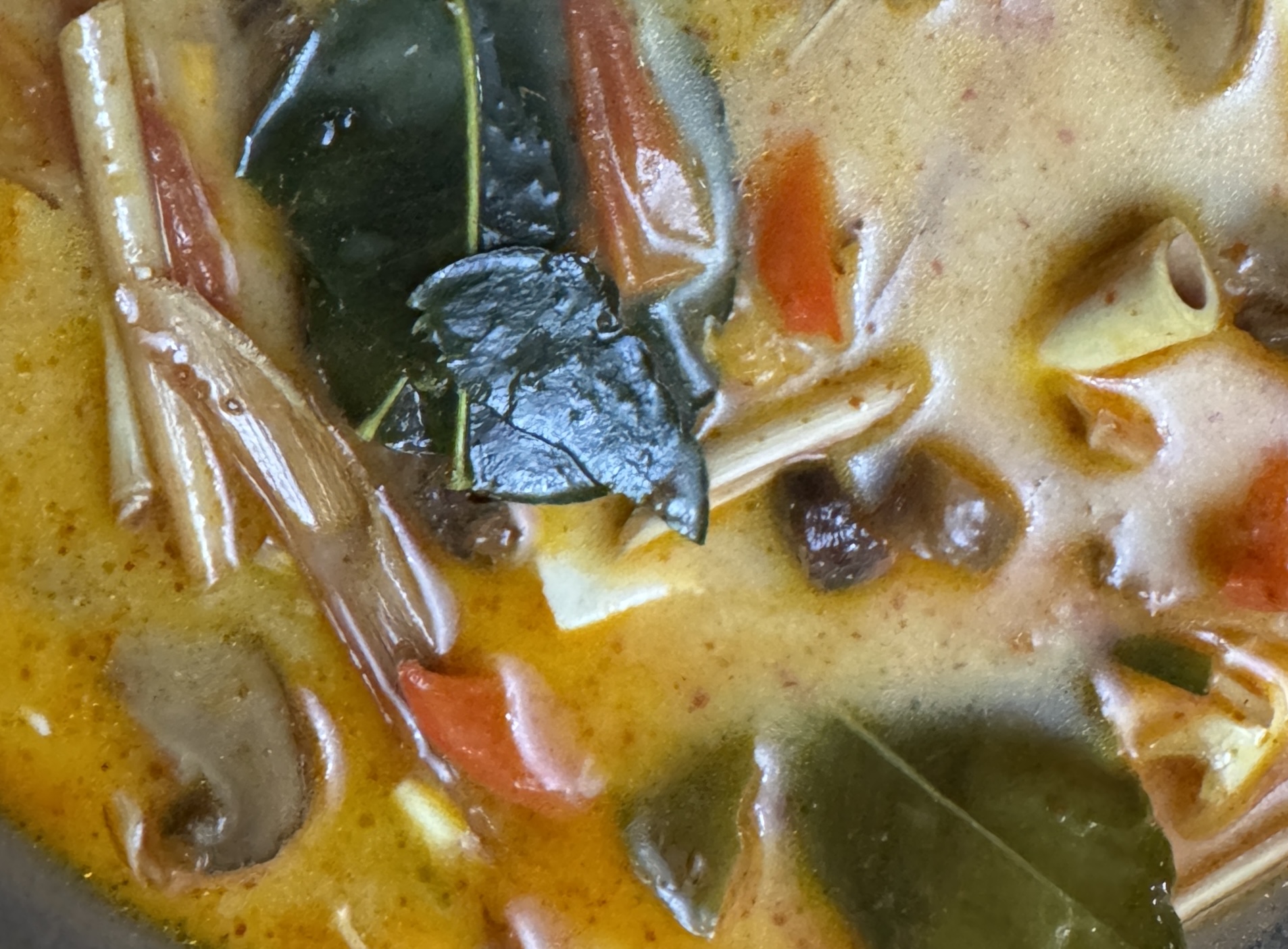
Visiting the local market — pinching a kaffir lime leaf and inhaling its aroma, scenting the gingers, and admiring the small, round Thai eggplants — was as enriching as visiting a museum.
At the school, I loved the chopping knife, wooden spatulas, and wok. Chef Irene reinforced the idea that in cooking, fire is a main ingredient. She made us count ten seconds after tossing in the last ingredient for certain dishes and then quickly shut off the burner.
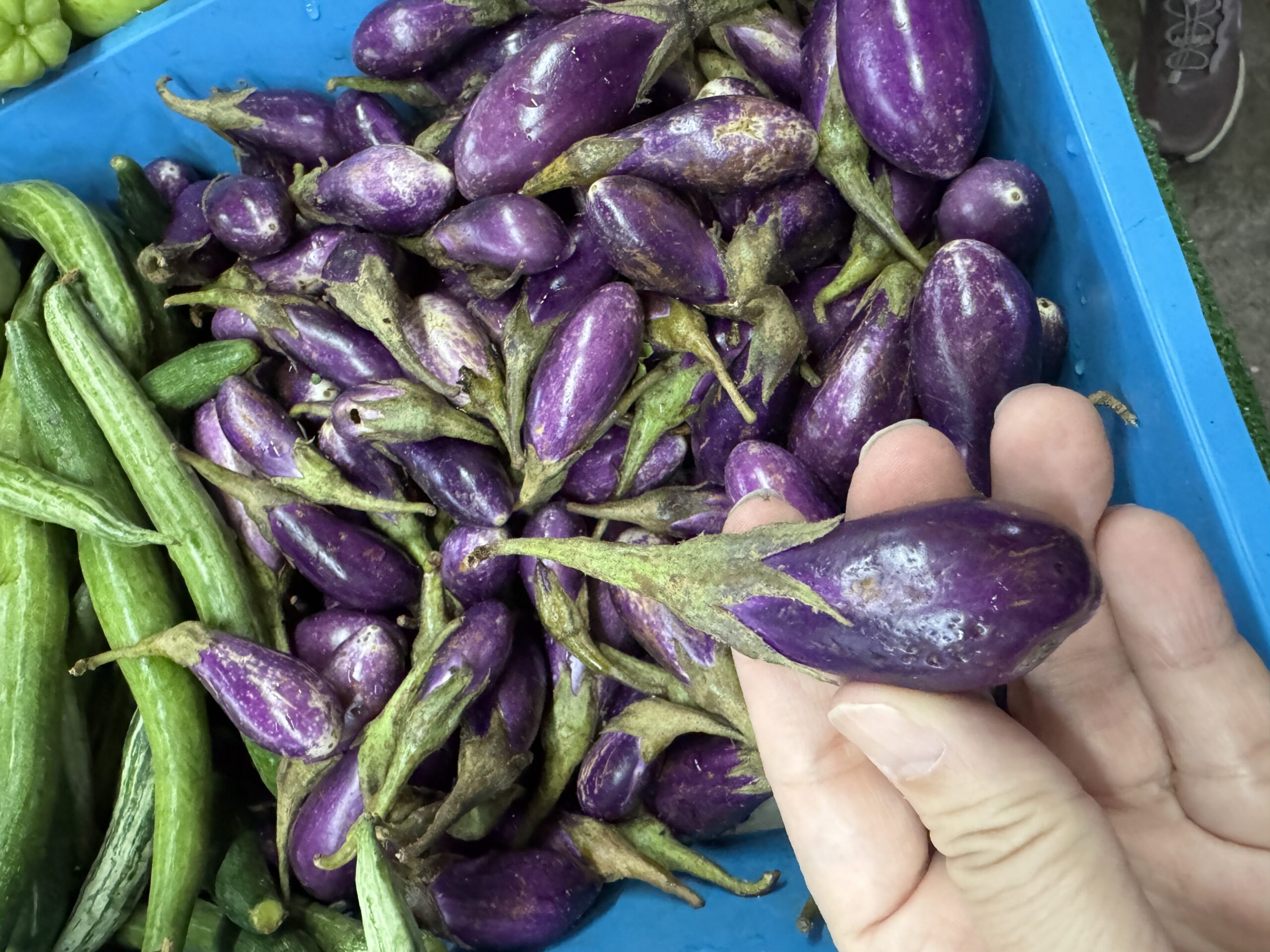
To make sure I could recreate the dishes confidently at home, we bought ready-to-cook ingredients from a Thai grocery and the local market before heading home.
Fresh and Dried Lemongrass for Tom Yum
After the recommended five minutes of boiling, the dried lemongrass from the ready-to-cook package did not produce the desired aroma, so I dunked in fresh stalks from my garden. Almost immediately, the soup became fragrant.
When Tom Yum Fights Back 🔥
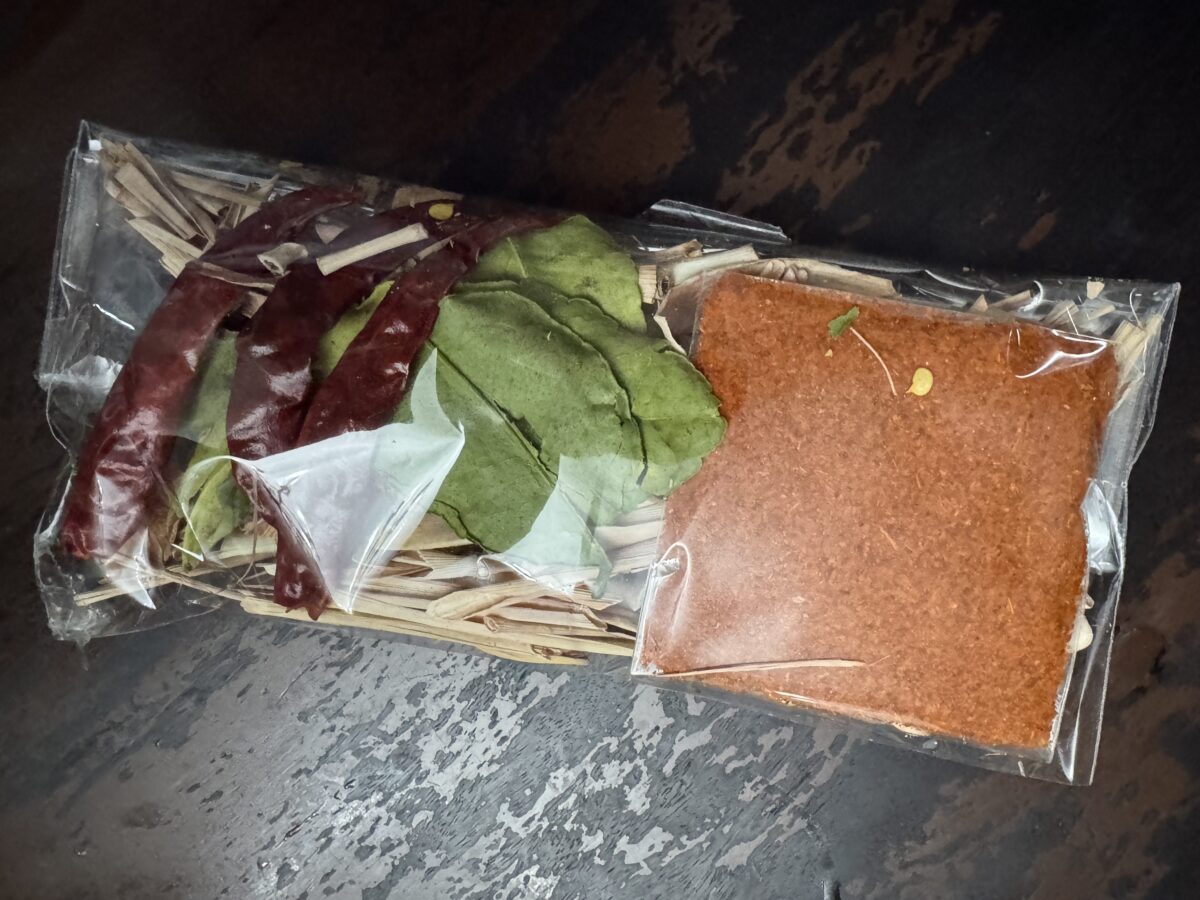
My first attempt at Tom Yum at home was… well, fiery. The ready pack already contained three dried chilies representing mild to hot intensity. There were three fresh siling labuyo on my kitchen table and I thought, my son loves chilies so why not? I slid them in and bravely included the seeds. I tasted the soup — it was intensely hot.
The soup lacked color, though, so I added the entire packet of chili powder. I remembered from class that this was meant mainly for color — but upon tasting what was left in the pack, I learned it carried a good amount of heat as well. The soup turned red and became a coughing-fit-spicy broth.
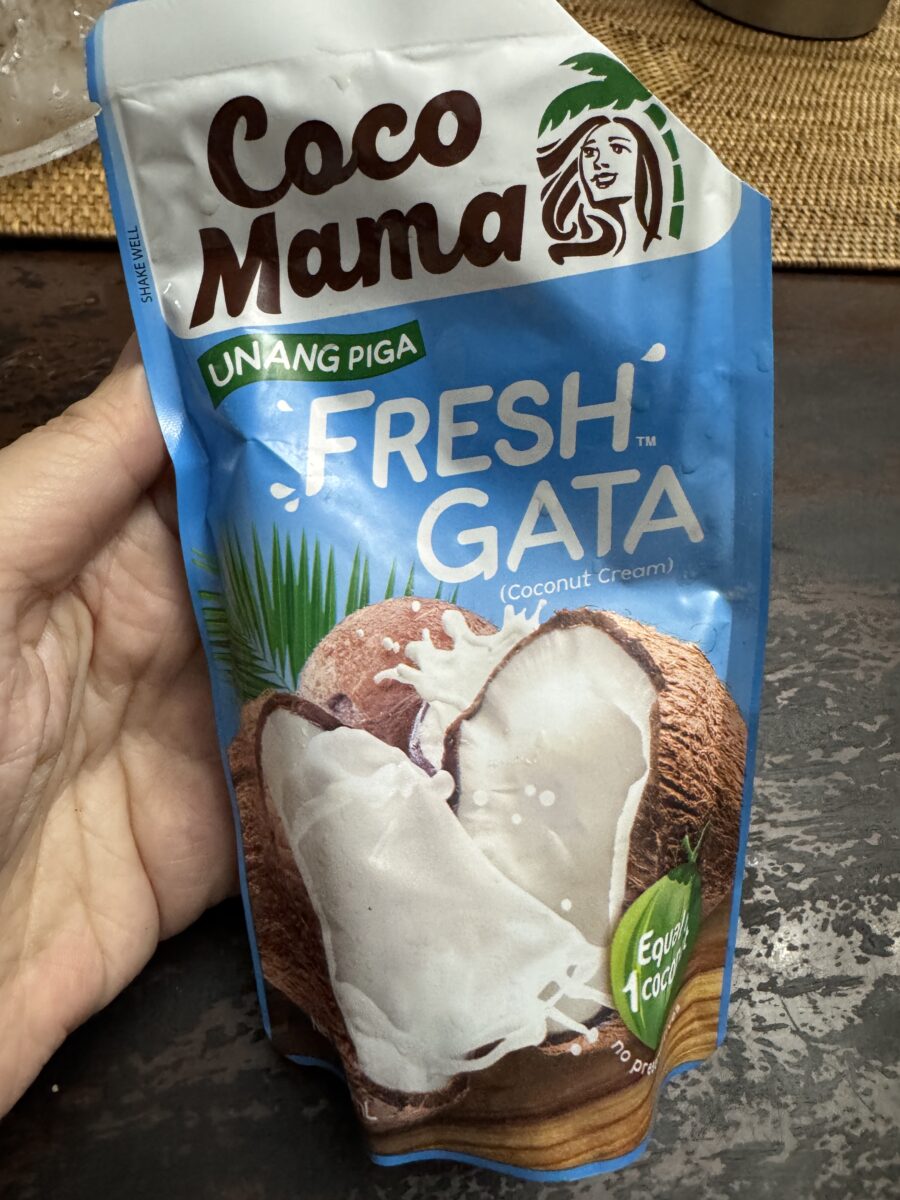
At the dining table, my family laughed, half-joking that we might die from the spice. As the soup cooled, it mellowed and became friendlier. The coconut milk blended beautifully with the herbal flavors.
Upon reviewing the ingredients, I was amused to realize that the components of that “foreign” soup could actually be found either in my garden or in our local market: biasong (similar, though not identical, to kaffir lime), tanglad (lemongrass), fresh and ground chilies, mushrooms, coconut milk, shrimp or chicken, and coriander.
The only ingredient unfamiliar to me was galangal — though apparently it isn’t foreign to us either, since it has a Visayan name, langkawas — a cousin of ginger that helps give Tom Yum its distinct flavor.
Pad Thai, Cebu Version
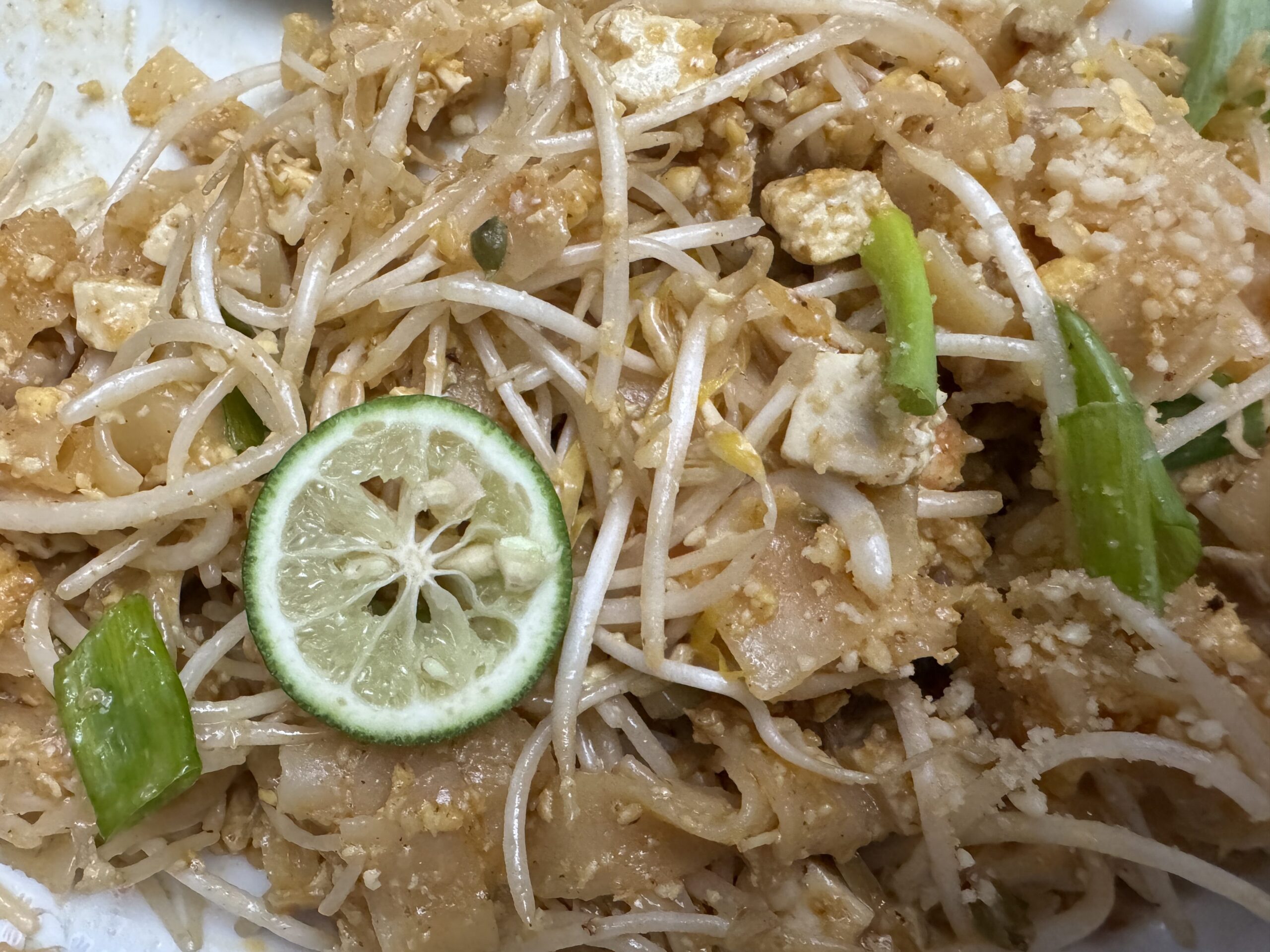
Pad Thai was even easier to localize. Everything is readily available in our markets: tamarind purée, oyster sauce, patis or fish sauce, rice noodles, eggs, bean sprouts, peanuts for garnish, biasong for acidity, and chives — which we substituted with dahon sibuyas.
End Notes
A sea may divide us geographically, but our food traditions are closely related. Chilies from the Americas, brought to Asia through the Spanish galleon trade, along with local limes, aromatic leaves, and gingers, show how connected we are — and yet how distinct we Filipinos and Thais remain in our cooking.
Leave a Reply